Blog

News, tutorials and release notes for Canvasly Web Studio, Sidcraft and VidCellar.

· Canvasly Web Studio · Development

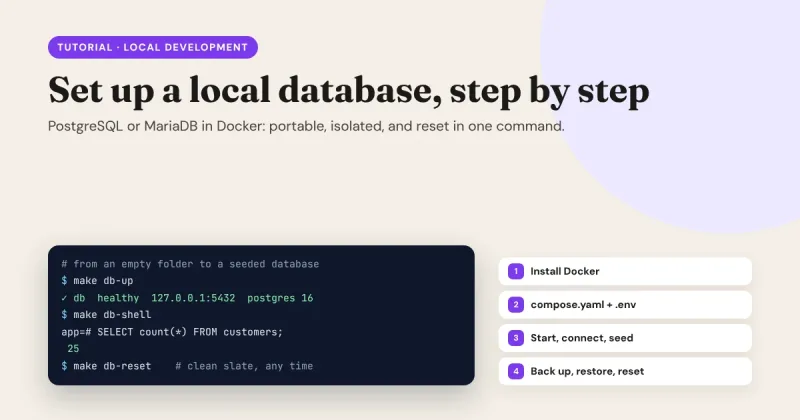
How to Set Up a Local Database, Step by Step (PostgreSQL and MariaDB with Docker)

In our Local development setup guide we said every layer of your environment should be written down, so a new machine needs one command. This tutorial does exactly that for the layer that causes the most trouble: the database. By the end you'll have a PostgreSQL database that starts in seconds, is reachable only from your own computer, comes with realistic test data, and can be backed up, restored or wiped clean with a single command. A MariaDB + WordPress version follows, for headless WordPress work.

Read the post How to Set Up a Local Database, Step by Step (PostgreSQL and MariaDB with Docker) →
· Canvasly Web Studio · Strategy

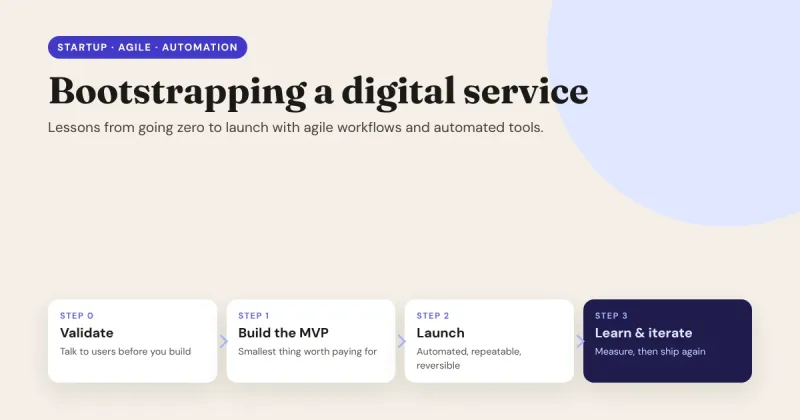
Bootstrapping a Digital Service: Lessons Learned Going from Zero to Launch with Agile Workflows and Automated Tools

Bootstrapping means building with the money, time and people you already have. No investors to fund a long runway, no team of specialists, no room for six months of building the wrong thing. That constraint is hard, but it's also an advantage: it forces you to learn fast, ship small and automate everything you'd otherwise have to do twice. This guide collects the lessons that matter most when you take a digital service, a SaaS product, an online course, an agency offer or a paid community, from an idea to a real launch.

Read the post Bootstrapping a Digital Service: Lessons Learned Going from Zero to Launch with Agile Workflows and Automated Tools →

· Canvasly Web Studio · Strategy

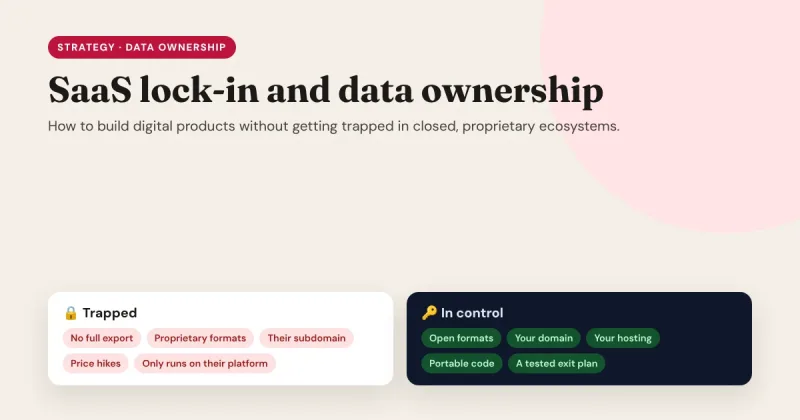
SaaS Vendor Lock-in & Data Ownership: How to Build Digital Products Without Getting Trapped in Closed Proprietary Ecosystems

Nobody signs up for lock-in. You sign up for a tool that saves you a week of work. Then you add your content, your customers, your design, your automations and your domain settings. A year later the price doubles, a feature you rely on disappears, or the company is acquired, and you discover that leaving would mean rebuilding everything. That is vendor lock-in: not a contract clause, but the cost of leaving, which quietly grows every month you stay. This guide explains where lock-in comes from, what it really costs, and how to build websites and digital products that use great services without being owned by them.

Read the post SaaS Vendor Lock-in & Data Ownership: How to Build Digital Products Without Getting Trapped in Closed Proprietary Ecosystems →

· Canvasly Web Studio · Architecture

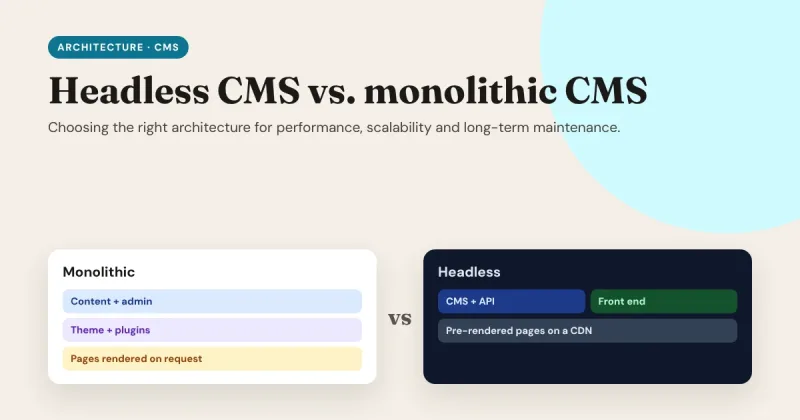
Headless CMS vs. Monolithic CMS: Choosing the Right Architecture for Performance, Scalability and Long-Term Maintenance

Every website runs on an architecture, whether you chose it or not. For most of the web's history, that meant a monolithic CMS: one system that stores your content, lets your team edit it, and builds the pages visitors see. A headless CMS splits those jobs apart: the CMS only manages content, and a separate front end turns it into a fast website. Neither is "better" in general. This guide helps you choose the right one for your site, and plan for the years after launch.

Read the post Headless CMS vs. Monolithic CMS: Choosing the Right Architecture for Performance, Scalability and Long-Term Maintenance →

· Canvasly Web Studio · Development

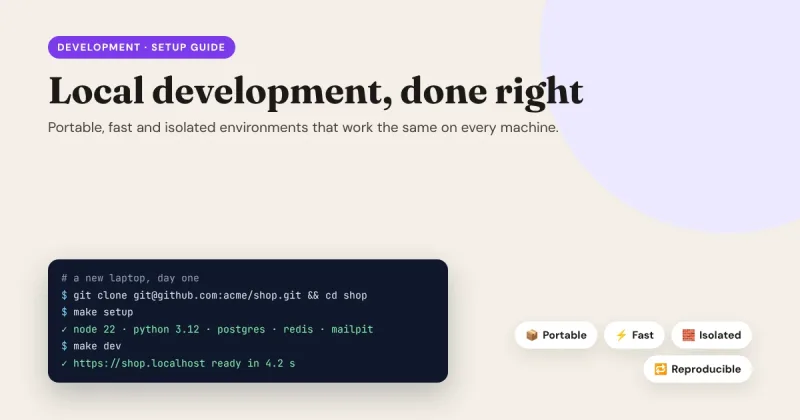
Local Development Setup Guide: Portable, Fast and Isolated Environments

"It works on my machine" is the most expensive sentence in software. It means a bug that only shows up for one person, a new developer who loses their first week to setup, or a release that breaks because production runs a different version than your laptop. A good local development environment fixes all three. It's portable (it runs the same on every machine), fast (it doesn't slow you down), and isolated (projects don't interfere with each other or with your computer). Here's how to build one.

Read the post Local Development Setup Guide: Portable, Fast and Isolated Environments →

· Canvasly Web Studio · Performance

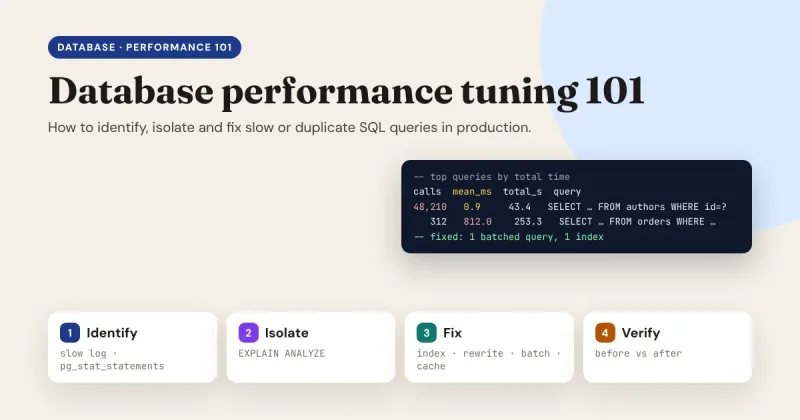
Database Performance Tuning 101: How to Identify, Isolate and Fix Slow or Duplicate SQL Queries in Production

Most slow websites aren't slow because the server is too small. They're slow because a handful of database queries do far more work than they need to, or run far more often than they should. This guide walks through a simple, repeatable loop for finding those queries in production, understanding why they're slow, fixing them safely, and proving the fix worked. Examples cover MySQL / MariaDB (which WordPress uses) and PostgreSQL.

Read the post Database Performance Tuning 101: How to Identify, Isolate and Fix Slow or Duplicate SQL Queries in Production →

· Canvasly Web Studio · Performance

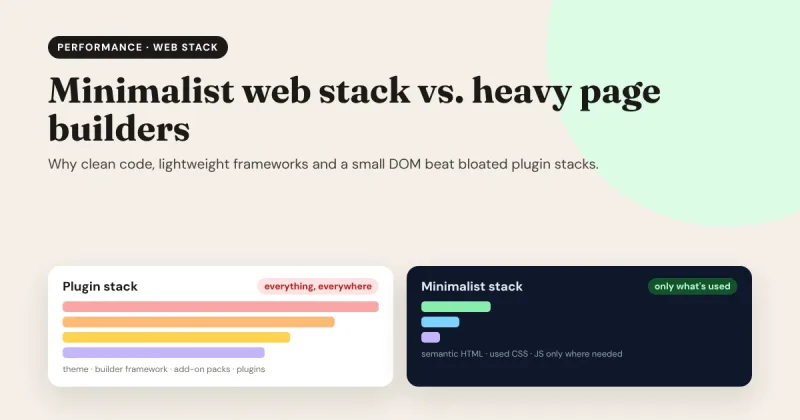
Minimalist Web Stack vs. Heavy Page Builders: Why Clean Code Wins

Every website is a promise to a visitor: "this will be worth the wait." The less they have to wait, the easier that promise is to keep. Heavy page builders made web design accessible to everyone, but they did it by sending visitors far more code than a page needs. A minimalist web stack flips that around: clean HTML, only the CSS and JavaScript a site actually uses, and a lightweight framework to deliver it. Here's why that wins, and how you can get it without giving up visual design.

Read the post Minimalist Web Stack vs. Heavy Page Builders: Why Clean Code Wins →

· Canvasly Web Studio · Opinion

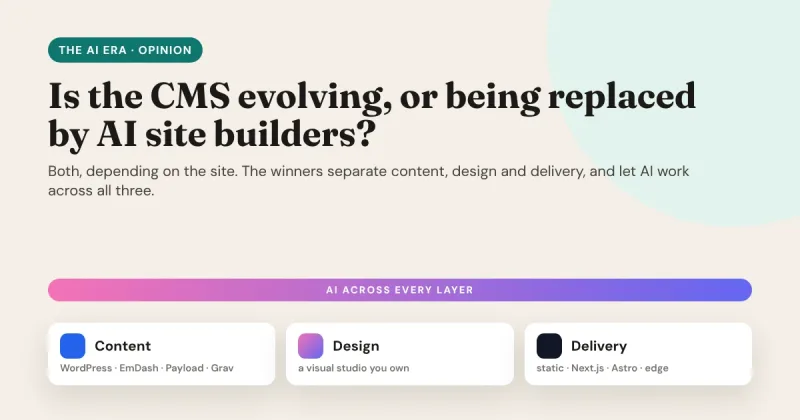
The Future of Web Development in the AI Era: Are CMS Platforms Evolving or Being Replaced by AI Site Builders?

AI can now turn a single sentence into a working website. So is the content management system (CMS) finished? Not quite. Some websites really are moving from a CMS to an AI builder. Most CMS platforms aren't disappearing, though; they're changing shape. The real shift is that the old all-in-one website is splitting into separate layers, and AI is learning to work across all of them.

Read the post The Future of Web Development in the AI Era: Are CMS Platforms Evolving or Being Replaced by AI Site Builders? →

· Canvasly Web Studio · Opinion

Are WordPress Page Builders Losing the Market After AI?

Short answer: yes, but not everywhere. Traditional WordPress page builders are losing ground in the wake of AI. The losses are concentrated at the simple end of the web: brochure sites, landing pages and small portfolios. Complex sites aren't leaving WordPress. They're leaving the builder-inside-the-admin model. That difference matters, and it's exactly the gap Canvasly Web Studio was built for.

Read the post Are WordPress Page Builders Losing the Market After AI? →